
A Guide to Scotch Whisky: A Taste of Place
If Bourbon is a story of rules, Scotch is a story of place. From the honeyed, floral malts of the Highlands to the smoky, maritime beasts of Islay, every Scotch tells you exactly where it's from.
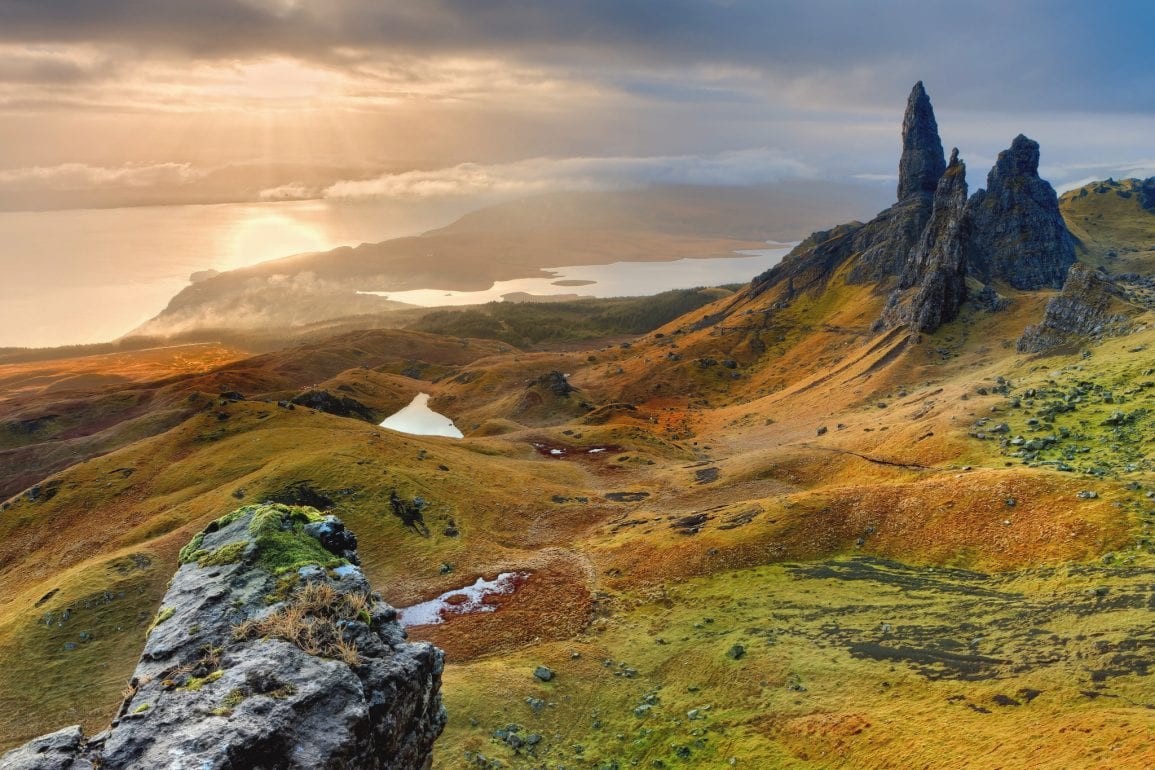
Scotch At a Glance
- Origin: Scotland
- Primary Grain: Malted Barley (for Single Malts)
- Key Flavors: Varies wildly by region: Honey, Heather, Fruit, Smoke, Brine
- Color: Pale Straw to Rich Mahogany
- Aging: Must be aged at least 3 years in oak casks.
The Great Divide: Single Malt vs. Blended
A Single Malt is the product of a single distillery, made from 100% malted barley. It is the purest expression of that distillery's style. A Blended Scotch, like Johnnie Walker, is a masterful blend of single malts and lighter grain whiskies from many different distilleries, crafted for consistency and a specific flavor profile.
The Magic of Peat
The most famous flavor in Scotch is peat. On islands like Islay, the barley is dried over a fire fueled by peat cut from the bogs. This imparts a powerful, smoky, medicinal, and briny character to the whisky. It's an unforgettable taste of the wild Scottish coast. Not all Scotch is peated, however. Many whiskies, especially from regions like Speyside, are completely unpeated and focus on fruity, honeyed, and floral notes.
Color: The Influence of the Cask
Unlike Bourbon, Scotch can be aged in used casks. This is a huge part of its flavor. A Scotch aged in an ex-Bourbon barrel will be golden and have notes of vanilla. One aged in an ex-Sherry cask from Spain will be a deep reddish-brown and have rich notes of dried fruit and spice. The color tells a story of the barrel's history.